GEORGIA EV POLICY
The Electrification Coalition conducts policy work in Georgia to advance the deployment and adoption of electric vehicles and development of charging infrastructure.
georgia EV Policy Landscape
Georgia has been a leader in electric vehicle adoption and is continuing its commitment to electrified transportation through key investments, program development, and policy. Currently, there are more than 30,000 EV drivers on the road in Georgia, and the state has more than 1,300 publicly available EV charging stations.
The National Electric Vehicle Infrastructure (NEVI) Program outlines Georgia’s plans for electric vehicle deployment. Georgia’s multi-year plan to spend $135 million in new federal funding to boost electric vehicle charging will also focus on the state’s rural and underserved communities, where fast public charging is limited. In 2022, the Georgia Department of Transportation submitted plans for installing charging stations on US-82 (between Albany and Brunswick) and US-441 (between Dublin and Cornelia). The national standard calls for installing four 150-kilowatt DC fast chargers that can accommodate all-electric vehicles and are located less than 50 miles apart and within one mile of a designated alternative fuel corridor. Currently, about a dozen stations in Georgia meet the standards along those corridors. Another 30 or more stations need to be built or upgraded.
Update: Georgia Identifies Alternative Fuel Corridor
EV MANUFACTURING in GEORGIA
Georgia is a leader in the automotive and manufacturing industry, with 186 companies investing over $2.9 billion in the state. Rivian, an American adventure electric vehicle automaker and automotive technology company, announced it is expanding its operations. It will build a $5 billion carbon-conscious EV manufacturing plant in Georgia. Construction on the facility, located east of metro Atlanta, started in the summer of 2022. Production is slated to begin in 2024. The Georgia facility will be capable of producing up to 400,000 vehicles per year once it is fully operational.
Georgia is also home to SK Innovation, one of the largest EV battery manufacturers in the nation. Since the company’s initial announcement in 2018, the company has already planned expansions, bringing total investment to nearly $2.6 billion. First, the company’s yearly output will supply 22 GWh of EV battery capacity, which is enough battery capacity for 330,000 electric cars. Upon completion of the expansion in 2025, the company will have the capacity to produce 50 GWh annually. Hyundai Motor Group’s manufacturing plant in Byran County is supporting a $5.5 billion investment and will create over 8,100 new jobs.
Freedom to buy vehicles in georgia
Outdated laws in Georgia are standing in the way of consumers’ freedom to buy the vehicles of their choice. These restrictions on car and truck buyers are obstructing economic growth and blocking Georgians’ access to the latest automotive technologies.
Check out our Freedom to Buy Vehicles in Georgia page for more information on the subject.
POLICY PRIORITIES IN GEORGIA
The Electrification Coalition is focused on several key priorities to support EV expansion in Georgia:
- Support for the expansion of medium- and heavy-duty electric vehicle adoption
- Promotion of EV-friendly rates and rate design best practices for charging, including the sale of electricity by kilowatt hours
- Support for utility transportation electrification planning
- Effective implementation of the state’s NEVI plan
- Effective implementation of federal funding opportunities for school bus and transit electrification
- Support for direct-to-consumer vehicle sales and service to expand vehicle choices and provide greater access to maintenance
Events in Georgia
Southeastern Regional Rural Roundtable

On October 4, 2023, the Electrification Coalition convened policymakers and industry representatives from across the Southeast in Charlotte, NC, to discuss issues affecting rural transportation electrification in Florida, Georgia, and the Carolinas. Areas of focus included workforce development, the role of utilities in the transition, battery recycling, and more. Click here to view speakers and relevant resources on the event page.
GEORGIA Rural Roundtable
On May 24, 2023, the Electrification Coalition hosted a roundtable on vehicle electrification in rural Georgia. Workshop attendees learned about the opportunities and challenges associated with the once-in-a-generation investment in electric transportation in Georgia and how rural communities can benefit and create a stronger and more resilient economy. Learn more.
GEORGIA EV EDUCATION DAY
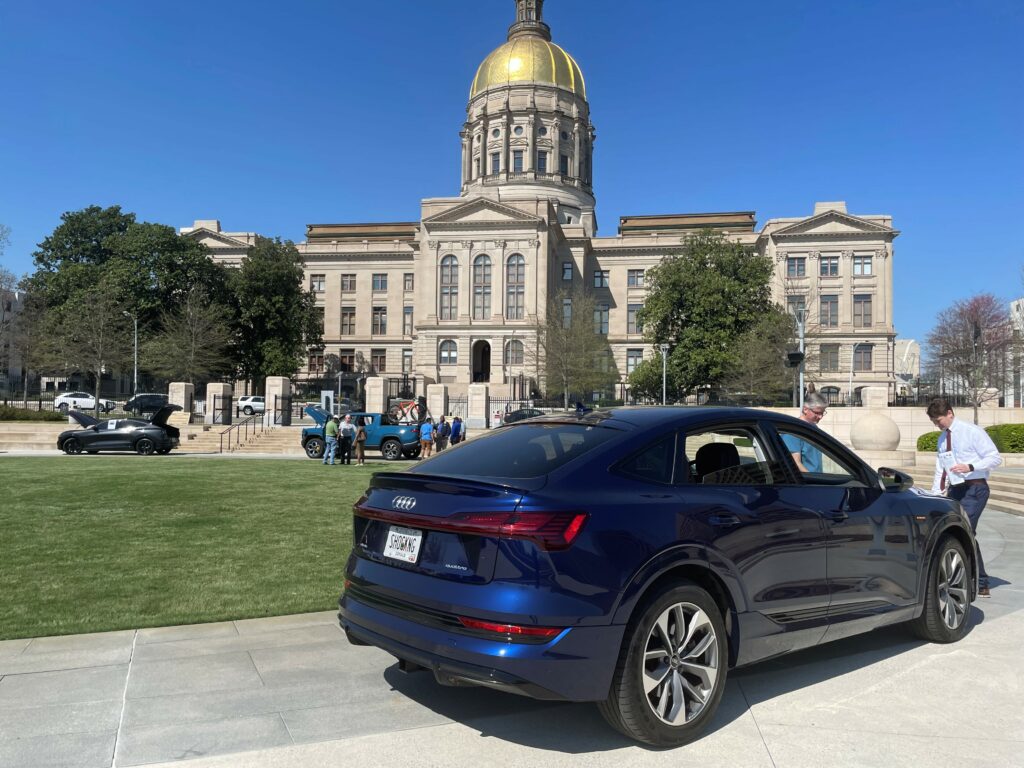
On March 7, 2023, the Electrification Coalition and our partners hosted an EV Education Day at the Georgia state capitol. The event presented an opportunity for advocates to inform lawmakers about the industry’s growth and encourage the policies needed to continue the state’s EV leadership. Learn more.